

Punnett square generator
Enter two parent genotypes for one gene or two. The Punnett square, the genotype and phenotype ratios and each probability update as you type. Free, with no account and no credits; download the square as SVG or PNG.
Two letters per gene: uppercase is dominant, lowercase is recessive. One gene (Aa) or two (AaBb).
Dihybrid Punnett square
Need the whole genetics figure?
Describe it in one sentence and SciDiagram draws an editable diagram: chromosomes, meiosis, a pedigree, a crossing scheme.
What a Punnett square shows
A Punnett square lists every way two parents' gametes can combine. One parent's possible gametes run along the top, the other's down the side, and each cell is one equally likely offspring genotype. Count the cells and you have the odds for a single child, or the expected share of a large brood.
Genes are written as letters, two per gene: an uppercase letter is the dominant allele and a lowercase letter the recessive one. Aa is a heterozygous parent, AA and aa are homozygous. This Punnett square generator assumes complete dominance, so any genotype with at least one uppercase allele shows the dominant trait. The phenotype column uses the textbook shorthand: A_ means "at least one A", aa means the recessive trait.
A monohybrid Punnett square follows one gene and has 4 cells for Aa × Aa. A dihybrid Punnett square follows two genes at once and has 16 cells for AaBb × AaBb, because each parent makes four kinds of gametes: AB, Ab, aB and ab.
How to make a Punnett square with this generator
Three steps, and the square redraws on every keystroke.
- 1
Type both parents' genotypes
Write two letters per gene, keeping each gene's alleles together: Aa for one gene, AaBb for two. Both parents need the same genes in the same order, so AaBb × aabb works but AaBb × Aa does not. The Try buttons load Aa × Aa, AaBb × AaBb and the test cross AaBb × aabb.
- 2
Read the square and the ratios
The gametes sit on the edges and every offspring genotype sits in its cell, with cells of the same phenotype tinted the same colour. Under the square you get each genotype and each phenotype as a count, a fraction and a percentage, plus both ratios in their simplest whole-number form.
- 3
Download it for homework or slides
Save the square as an SVG, which stays sharp at any size and can be edited in Illustrator, Inkscape or PowerPoint, or as a PNG to paste into a worksheet, a lab report or a lesson slide.
Reading a dihybrid Punnett square: where 9:3:3:1 comes from
In a dihybrid cross of two double heterozygotes (AaBb × AaBb), the 16 cells fall into four phenotypes: 9 show both dominant traits (A_B_), 3 show only the first (A_bb), 3 show only the second (aaB_) and 1 shows both recessive traits (aabb). That 9:3:3:1 is the phenotypic ratio Mendel saw in his pea crosses, and it holds whenever the two genes sort independently.
The genotypic ratio is longer, because it counts every distinct genotype rather than every visible trait. For AaBb × AaBb there are nine genotypes: AABB, AAbb, aaBB and aabb appear once each in 16 cells, and AaBb four times, giving the ratio 1 : 2 : 1 : 2 : 4 : 2 : 1 : 2 : 1. The generator lists all of them so you can check a worksheet answer line by line.
A test cross is the other classic: crossing AaBb with aabb gives four phenotypes in equal shares, 1 : 1 : 1 : 1, or 25% each. If a real test cross gives very different numbers, that can be a sign the genes are linked, which a Punnett square alone does not model.
Punnett square calculator at a glance
- Price
- Free, no account
- It runs in your browser and uses no credits.
- Genes
- One (monohybrid) or two (dihybrid)
- Inheritance
- Complete dominance
- Codominance, incomplete dominance and sex-linked traits are not modelled.
- Input
- Two letters per gene, e.g. Aa or AaBb
- Uppercase is dominant, lowercase recessive.
- Results
- Genotype and phenotype ratios, each as a count, fraction and percentage
- Downloads
- SVG and PNG
When the Punnett square maker will not draw your cross
Most problems come from how the genotype is written. Here is what each message means.
"Write two letters per gene"
- What to change
- Give every gene two alleles: A becomes Aa or AA.
- What is fine as it is
- Upper or lower case on either allele; Aa and aA mean the same thing.
"… mixes two genes"
- What to change
- Keep each gene's alleles side by side: AaBb, not ABab.
- What is fine as it is
- Which gene comes first, as long as both parents use the same order.
"Both parents need the same genes"
- What to change
- Write the same genes for both parents, even a homozygous one: aabb, not just aa.
- What is fine as it is
- Different genotypes for the same genes; that is the whole point of the cross.
The ratio does not match your textbook for a codominant or sex-linked trait
- What to change
- Work those crosses by hand: this tool treats every uppercase allele as fully dominant and every gene as autosomal. For X-linked genes, use X and Y gametes.
- What is fine as it is
- For codominance and incomplete dominance, the cell counts, which are still right; only the phenotype grouping differs.
Punnett square questions
Count the cells. Each cell of the square is equally likely, so a genotype that fills 2 of 4 cells has a probability of 2/4, or 50%. For the phenotypic ratio, group the cells by the trait they show and divide every count by the largest number that divides them all: 3 dominant and 1 recessive in a monohybrid cross gives 3:1, and the 16 cells of AaBb × AaBb give 9:3:3:1. The generator does this for you and shows the fraction and the percentage next to each result.
The genotypic ratio counts the allele combinations, such as 1 AA : 2 Aa : 1 aa. The phenotypic ratio counts the traits you can see, and with complete dominance AA and Aa look the same, so the same cross gives 3 dominant : 1 recessive.
No. It handles one or two genes, which covers most homework and exam questions. A three-gene square has 64 cells; for that, multiply the single-gene probabilities instead, since independent genes combine by multiplication.
Not yet. The generator assumes complete dominance on autosomal genes. For codominance, such as AB blood type, or incomplete dominance, such as pink snapdragons, the cells and genotype counts are still right but the phenotype grouping is not. For genes on the X chromosome the square itself does not apply, because males carry one allele; work those crosses by hand with X and Y gametes.
Yes. Download the PNG to paste it in, or the SVG to resize it without blur or to change its colours and fonts in a drawing app. The download is the same square you see on the page, with the ratios underneath.
No. The Punnett square generator works without signing in and never uses credits. An account is only needed for the AI figure generator, which draws whole diagrams such as meiosis, a crossing scheme or a pedigree from one sentence.
More free science tools
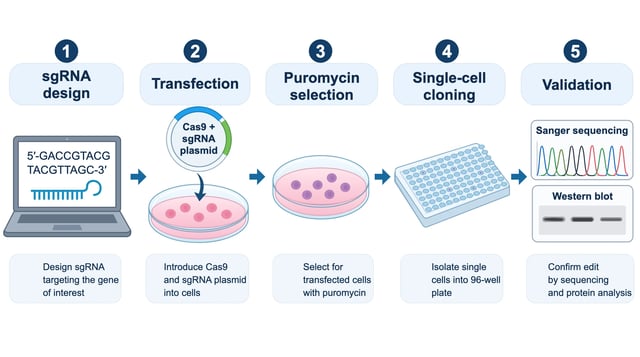
Edit SVG online, label by label
Pick one of our example figures or open your own SVG file. Click a label to retype it, change colours and font size, move parts, then download a PNG or the edited SVG. Editing is free and needs no account.
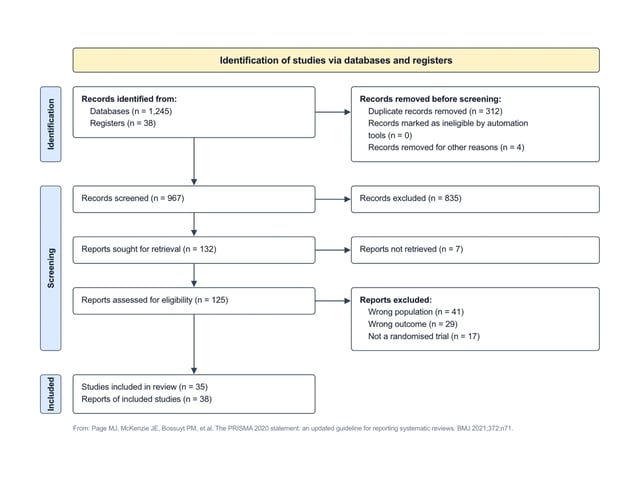
PRISMA flow diagram generator
Fill in the counts from your search and screening. The PRISMA flow diagram lays itself out, checks that every box adds up from the one before it, and downloads as an editable SVG or a PNG. Free, with no account.